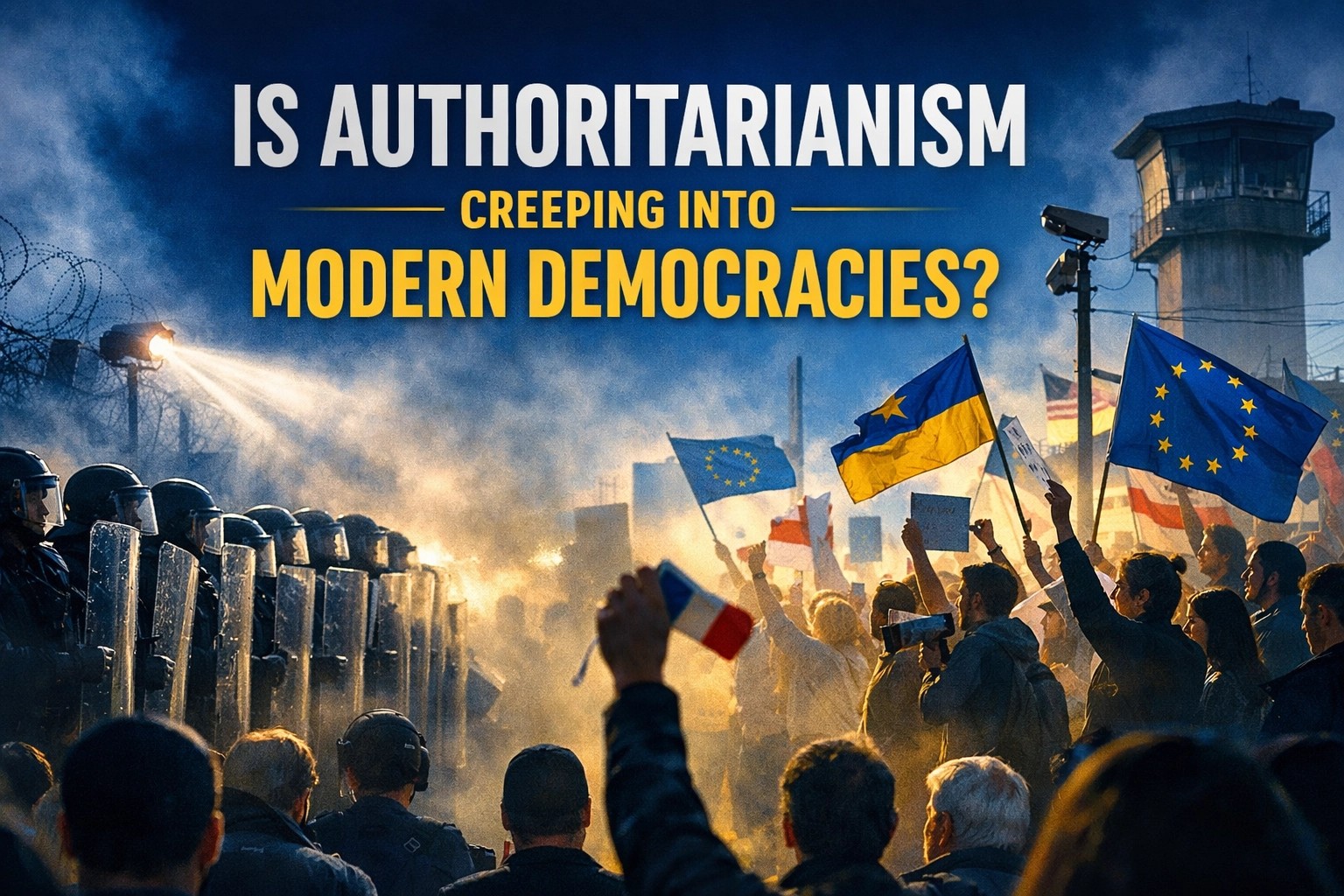
Is Authoritarianism Creeping into Modern Democracies?

From voter eligibility laws in the United States to one‑party parliaments in the Caribbean, recent developments are raising uncomfortable questions about the health of democratic systems that publicly champion freedom, choice, and accountability.
Two Headlines, One Question
In February 2026, two seemingly unrelated political developments captured international attention:
- In Washington, the Republican‑controlled U.S. House of Representatives passed the SAVE America Act, a bill requiring documentary proof of U.S. citizenship to register and vote in federal elections, just months ahead of the November midterm elections. [cbsnews.com], [yahoo.com]
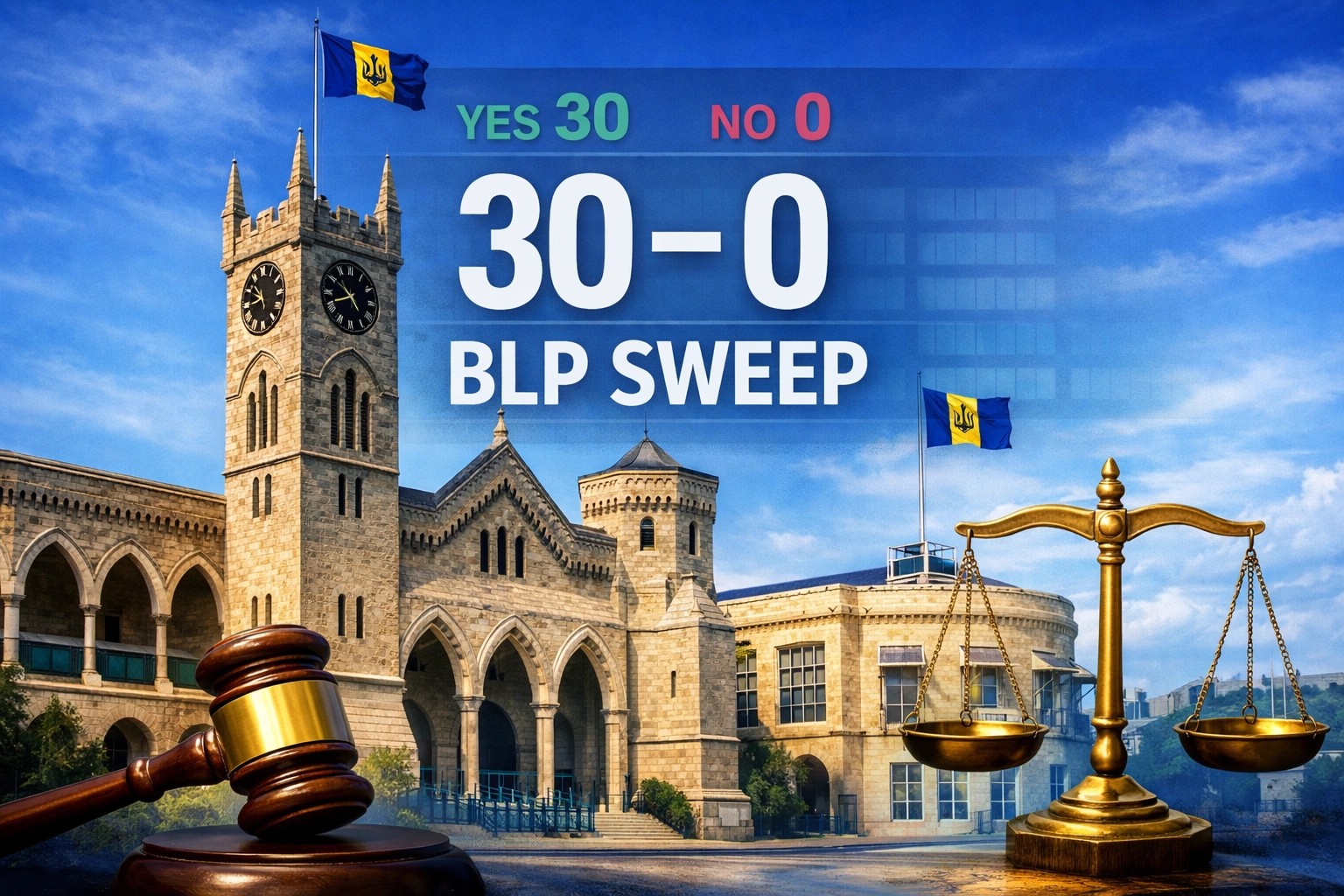
- In Bridgetown, Prime Minister Mia Amor Mottley secured a historic third consecutive clean sweep, with her Barbados Labour Party (BLP) winning all 30 seats in the House of Assembly, following an election marked by low voter turnout estimated at roughly 30%, and promptly announced plans to introduce legislation preventing elected officials from crossing the parliamentary floor. [usnews.com], [cbc.bb]
At face value, both developments occurred through legal, constitutional processes. Yet together they raise a deeper question:
Are democratic systems increasingly using the language of legality and stability to justify the concentration of power and the narrowing of political participation?
The U.S. Case: Election Integrity or Voter Restriction?
Supporters of the SAVE America Act argue that requiring proof of citizenship is a common‑sense safeguard to protect electoral integrity. House Republican leaders have framed the bill as a response to declining public trust in elections, despite acknowledging that non‑citizen voting in federal elections is already illegal and statistically rare. [apnews.com], [yahoo.com]
Critics, however, point to the practical consequences rather than the intent. According to voting‑rights researchers and civil society groups, tens of millions of eligible U.S. citizens lack immediate access to passports or certified birth certificates, particularly:
- Elderly voters
- Rural populations
- Low‑income communities
- Women whose legal names differ from birth records due to marriage or divorce
These groups could face significant barriers to participation, especially if the law were implemented quickly before the midterms. [apnews.com], [english.elpais.com]
From a democratic‑theory perspective, this reflects a familiar pattern:
When access to the ballot is framed primarily as a security risk rather than a civic right, the burden of proof shifts from the state to the citizen.
That shift does not abolish elections—but it can quietly reshape who gets to meaningfully participate in them.

Barbados: When Electoral Dominance Becomes Structural Power
Barbados presents a different but equally instructive case.
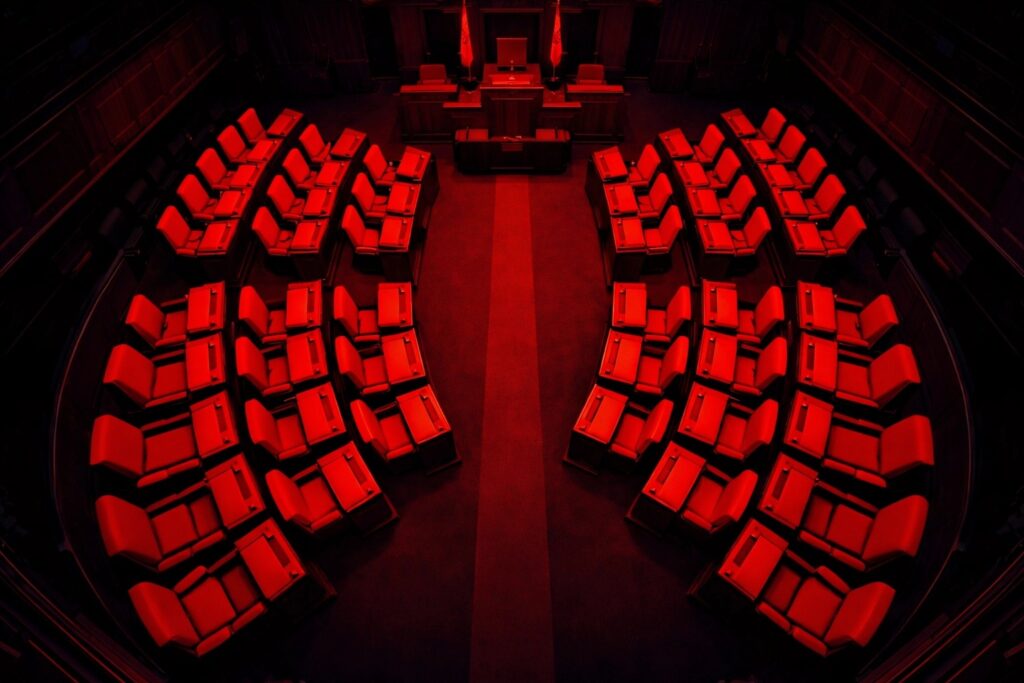
Prime Minister Mia Mottley remains widely respected internationally for her leadership on climate finance, debt reform, and small‑state diplomacy. Her electoral victories are real, decisive, and constitutionally valid. Yet three consecutive 30–0 parliamentary outcomes have left Barbados with no formal opposition in the House of Assembly, a condition political analysts describe as a “one‑party parliament”. [lansinginstitute.org], [usnews.com]
In this context, the government’s announcement—made immediately after the 2026 election—to introduce legislation preventing MPs from crossing the floor has sparked debate. [cbc.bb]
Floor‑crossing restrictions are not inherently authoritarian. In some systems, they are justified as:
- Preventing opportunistic party‑switching
- Preserving voter intent
- Stabilizing governance
However, in a parliament without opposition, such reforms take on a different meaning. They risk:
- Locking in political homogeneity
- Eliminating internal dissent
- Converting electoral dominance into structural permanence
Compounding this concern is low voter turnout, which suggests not overwhelming enthusiasm but possible voter disengagement, fatigue, or resignation. [associatestimes.com]
As Caribbean political observers have noted, democracy weakens not only when votes are suppressed, but when citizens stop believing their votes matter.
Authoritarianism Today Rarely Arrives with Tanks
Modern authoritarianism does not usually announce itself through coups or suspended constitutions. Instead, it often advances through:
- Legal reforms passed by elected bodies
- Narratives of efficiency, stability, or protection
- Incremental narrowing of political alternatives
- Weakening of opposition capacity rather than outright bans
Political scientists increasingly describe this phenomenon as “democratic backsliding” or “electoral authoritarianism”—systems where elections still occur, but competition, participation, or accountability steadily erode.
In both the U.S. and Barbados:
- The form of democracy remains intact
- The substance—broad participation, pluralism, and contestation—faces pressure
The Real Warning Sign: Normalization
Perhaps the most concerning aspect is not any single policy or election result, but how normalized these shifts have become.
- Voter restrictions are framed as routine administrative updates
- One‑party legislatures are justified as efficiency mandates
- Institutional safeguards are altered in moments of peak political strength
History shows that democracies rarely collapse overnight. They thin out, quietly, until citizens realize that choice still exists on paper—but not in practice.
Final Reflection
So, are we seeing authoritarianism creep into countries that call themselves democratic?
The more accurate answer may be this:
We are seeing democracies tested by how much power they allow winners to consolidate—and how much participation they are willing to sacrifice in the name of order.
The challenge ahead is not simply to defend elections, but to defend meaningful democracy: one that tolerates opposition, protects access, and resists the temptation to confuse dominance with legitimacy.





![[HERO] Governance Without an Opposition: Building Guardrails for Transparency in Barbados](https://cdn.marblism.com/iIaFRbXt3x3.webp)